Building Stronger Men Through Blue-Collar Discipleship

Imagine for a moment you work in an industrial plant. You just got off a 12-hour day shift. It’s been a long day, your back is hurting, and your family is waiting on you to get home because the water heater decided to go out. Where is the time for spiritual growth and encouragement? Where are you supposed to find time to disciple your family? When will you find time to be discipled yourself? For many, especially in the area I live in, this is the reality that most men are living in.
We understand that discipleship, both for us and our families, is not some add-on we get to enjoy when it’s convenient. It isn’t something that only the people that have time get to enjoy doing; those with flexible schedules. Discipleship is for all of us. It is the normal Christian life, men helping men become more like Jesus, no matter how long the hours or how irregular the shifts. But for those working long extended hours, and even rotating shifts, you often get left out, or over-looked. So, how can we help correct this?
The church needs strong men, steady men who are rooted in Christ on the job site, in the truck, and at the kitchen table. Because discipleship happens all around us, at all times, then we always have the opportunity in front of us; both to be discipled and to disciple. In this blog, we are going to answer four fundamental questions about discipleship, and then we will get practical in how to be better stewards of our opportunities.
What Is Discipleship?
Let’s start with the words of Christ in the great commission.
Matthew 28:16–20 (ESV): Now the eleven disciples went to Galilee, to the mountain to which Jesus had directed them. And when they saw him they worshiped him, but some doubted. And Jesus came and said to them, “All authority in heaven and on earth has been given to me. Go therefore and make disciples of all nations, baptizing them in the name of the Father and of the Son and of the Holy Spirit, teaching them to observe all that I have commanded you. And behold, I am with you always, to the end of the age.”
To put it simply, discipleship is the process of making disciples; baptizing and teaching all that Jesus has commanded of his people. Discipleship is one Christian intentionally helping another Christian grow in love for God and obedience to His Word. It is speaking truth in love so hearts change from the inside out (Ephesians 4:15; 2 Timothy 3:16-17). It is the practice of sanctification being lived out in community with the people God has placed around us.
This process of discipleship and change is not merely seeking behavior modification or self-help. It is the Holy Spirit using the people in our lives, and the Word of God to renew our minds, and transform our hearts (Romans 12:2; Hebrews 4:12). It is the process of becoming more like Christ, while helping others, become more like Christ. Follow me, as I follow Christ (1 Corinthians 11:1). And here’s the thing, regardless of our work schedules, we can do this. You don’t need a seminary degree, or a more flexible schedule. You just need a Bible, a brother, and a willingness to walk together.
What Does Discipleship Look Like?
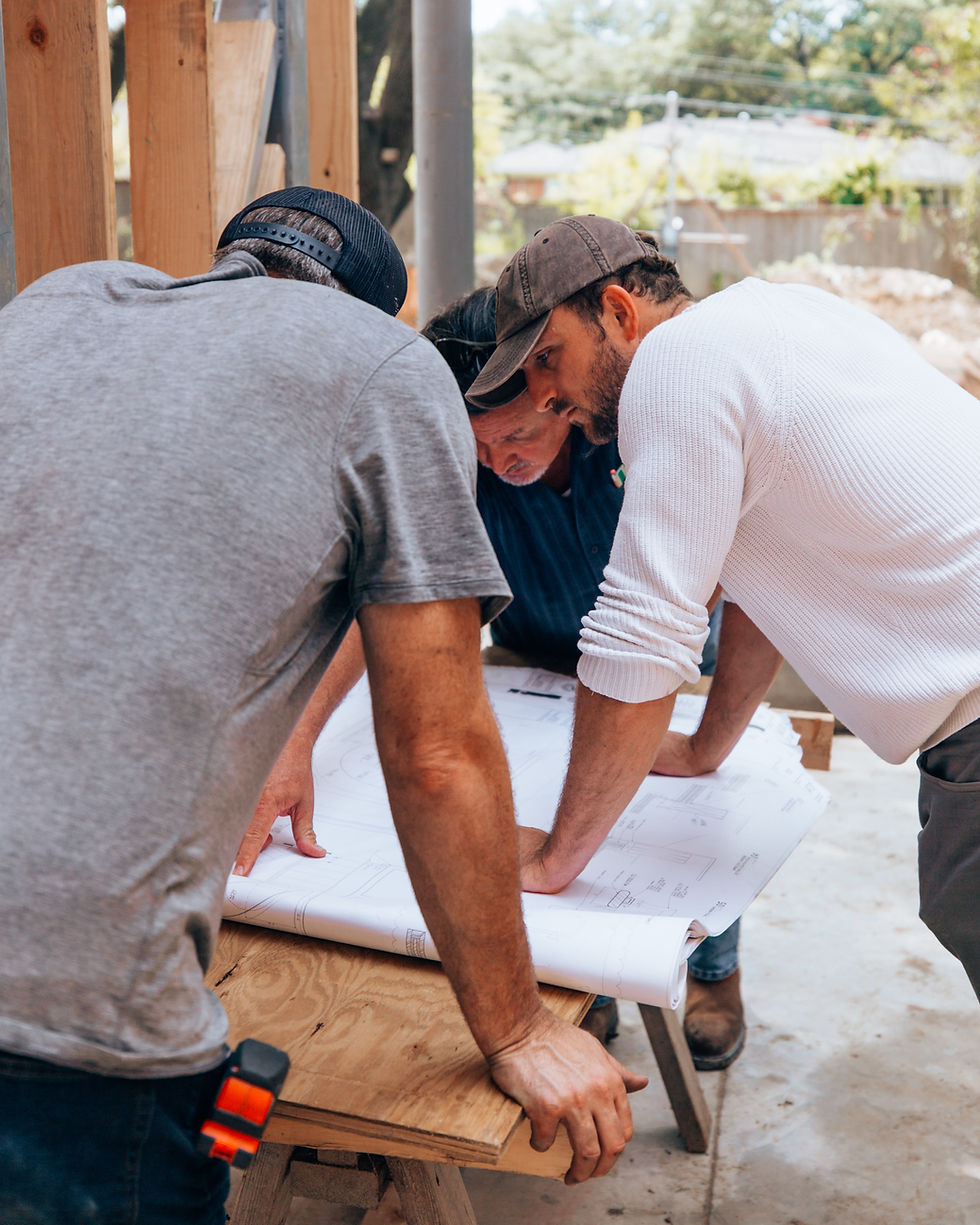
Now we turn to the question of ‘What does discipleship look like?’ This is often where we make things complicated. We tend to want to fit discipleship into some scheduled, pre-packaged, programmatic template, rather than life lived out in everyday community. Discipleship does not have to take place in a classroom or a coffee shop (but it can). Sometimes, for many, this isn’t even possible. Instead, discipleship takes place on the construction site, or around the break room table.
Here are four elements of discipleship that can be easily maintained and incorporated into our daily rhythms.
Teaching and being taught (Colossians 3:16; 2 Timothy 2:2)
Encouraging and spurring one another on (Hebrews 10:24-25; 1 Thessalonians 5:11)
Admonishing and correcting when needed (Proverbs 27:17 – “Iron sharpens iron”)
Praying together and bearing burdens (James 5:16; Galatians 6:2)
All of this can be done through simple text messages, during break times, or phone calls late at night. Pick a verse to send to a buddy, a short explanation of it, a simple application for the day or week, and share a couple deeper personal prayer requests. Check in on each other throughout week to encourage one another, hold each other accountable, and continue the prayers. All of which could easily take 10 minutes of your day to complete.
Ordinary men, using ordinary means, with the extraordinary power of the Word and the Spirit; discipleship in real-time. This is discipleship on the run for those who have busy schedules, long work hours, and tons of things to get done after work. Obviously this is just one example of many that could be used; there are a thousand different ways this could look. Be intentional about it and start slow; God is faithful.
What Is the Goal of Discipleship?
For the third question we tackle the goal, or telos, of the discipleship process. I think Scripture is plan in it’s teaching here on two main goals: First, to be conformed to the image of Christ (Romans 8:29). The process of sanctification is always leading us to this end. Second, to build unity and maturity in the faith (Ephesians 4:13). Discipleship is always a process of teaching our own hearts first, while also teaching someone elses heart. It is a mutual growth process that builds us up into the image of Christ.
The goal is not a perfect attendance record or impressive spiritual resume. It is a man whose heart loves Jesus more, whose words and actions look more like Jesus, and whose life bears fruit that lasts (John 15:8). It is a guy who comes home from work and still has patience with his kids. A man who refuses to join crude talk on the job site. A brother who prays instead of numbing out after a brutal shift. This only happens when we counsel our own hearts (and each other’s) with Scripture instead of excuses, fatigue, or the idea that “that’s just how I am!”
Change is possible, but it takes intentionality. Yes, we are tired and exhausted after a 12–16-hour work day. But that doesn’t mean we become useless once the workday is over. We have to use our time wisely throughout the day, and remember, we have family that is counting on us to be present when we get home.
How Can Men Engage With One Another and Build Each Other Up?
As I stated just above, this is where the intentionality must come in. We are working long hours, crazy shifts, and lots of overtime. We are fighting physical, spiritual, and mental exhaustion, limited time, and hearts in desperate need of rest. This creates a natural passivity in our desires for discipleship. We know we need it, but we far too often say, “Maybe next week, when I get caught up.”
Here a few ways we can make this much more practical:
Text-and-prayer chains – Daily verse + one-sentence “How’s this hitting you today?”
Shift-friendly accountability partners – Same shift or opposite shift so someone is always “on” when you need prayer.
15-minute truck-stop or break-room huddles – Read one Psalm or Proverbs chapter out loud, ask two questions: “What does this say about God?” and “What does this say about my heart?”
Weekend “tool-belt” service days – Once a month, a small crew helps a brother with a home project while talking about marriage, fatherhood, or temptation.
Phone discipleship – Older man calls a younger man on his drive home; they work through one chapter of a short book (e.g., Proverbs or a specific book on a topic).
Church “third-shift” small groups – Sunday afternoon or Saturday morning options so night-shift guys aren’t left out.
Remember, missing a week because of overtime is not failure. Text the brother and pick right back up. The goal is faithfulness, not perfection.
Some Steps To Get You Started In Discipleship
Here are four things you can begin doing right now to help get you started in the right direction:
Step 1: Pray and ask God for one brother He wants you to walk with.
Step 2: Reach out with a clear, low-pressure ask: “Would you be up for texting through a chapter of Proverbs once a week?”
Step 3: Use simple tools – a shared Bible app (YouVersion), a voice memo of the week’s verse, or a one-page biblical counseling handout.
Step 4: Keep it Christ-centered – always bring the conversation back to the gospel, not just “try harder.”
Not everyone you ask is going to be as willing as you are to do discipleship; that’s ok. Just remember, Jesus is with you on the job site and in the quiet moments after your shift. He equips us, as ordinary men, to use ordinary means, to disciple other ordinary men, with extraordinary results, as the Spirit sees fit. Let’s be intentional, and get to work, even while we are at work.
Conclusion
When blue-collar men disciple one another, the whole church gets stronger, families are steadier, workplaces see quiet gospel witness, and the next generation watches men who finish well. You don’t need more time; you need to use the scraps of time you have for eternal things. Talk to your pastors/elders about a men’s group that is tailored to people’s work schedules. Remind yourself every day, the same power that raised Christ from the dead is at work in you, on the night shift, in the cab of the truck, and in every hard conversation with a brother.


Comments